Board of Advisors Spotlight: A Commitment to Those Who Serve
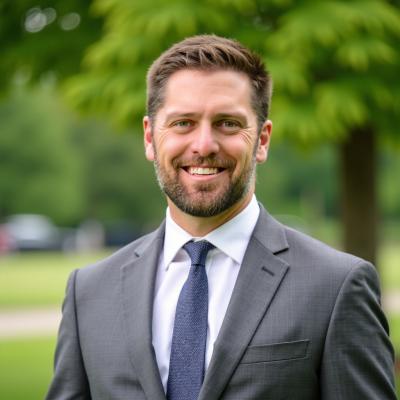
As a Veteran, friend of the University of Denver, and member of the GSPP Board of Advisors, Austin Carpenter understands firsthand how military service can continue shaping a person’s life long after the uniform comes off and why clinicians must be prepared to recognize wounds that are not always visible.
Carpenter first became involved with GSPP after a friend introduced him to the school’s work supporting Service members as they transition out of the military. The mission immediately resonated with him.
“I’ve watched plenty of friends carry trauma, both on active duty and long after,” he said. “Some of the hardest injuries don’t show on the outside and are easy to miss. I wanted to help build a bench of clinicians who know what to look for.”
For Carpenter, understanding the military experience is essential to providing effective mental health care. Service members may be sent far from home, placed in life-threatening situations, separated from their families, and trained to push through fear, pain, and instinct in service of a larger mission. Those experiences, combined with the habits developed to navigate them, do not simply disappear when military service ends.
“The mental and physical injuries overlap with brain injury as the clearest example,” he said. “Service members are trained to push past fear, pain, and instinct in ways that don’t switch off when they come home. A clinician who doesn’t understand that can miss what’s right in front of them.”
His commitment to military mental health is also deeply personal. While serving on active duty and leading a squad stationed in Washington, D.C., Carpenter saw how the pressures of military life could extend well beyond the job itself. Members of his squad came to him struggling with strained relationships, long-distance marriages, family pressures, and mental health crises. At times, those conversations meant helping a teammate access immediate support and ensuring he was safe.
“These were men who signed up for one of the most demanding jobs there is,” Carpenter said, “and for some, the hardest part was accepting help.”
One experience in particular has stayed with him. A close friend with significant combat experience once called Carpenter from the West Coast in the early morning hours. Carpenter slept through the call and later learned his friend had been in crisis and close to ending his life. Fortunately, his friend reached someone else that night and received the help he needed.
“Missing that call stays with me,” Carpenter said. “I want every service member dealing with combat or non-combat stress to be able to find help, and to reach for it.”
This is one reason Carpenter believes programs like those at GSPP have an important role not only in preparing clinicians, but also in advancing the field itself. He hopes military-focused education and research will continue moving beyond what is already understood, examining root causes, testing new approaches, and exploring connections that may not appear obvious.
He is particularly interested in understanding how the effects of trauma and stress ripple outward, influencing relationships, families, and communities as well as the individual service member.
“I’ve seen signs that GSPP is part of the community driving in that direction,” he said, “and I want to help it keep moving past where things stand today. The goal is to save as many lives as possible and make the rest of those lives better.” Underlying Carpenter’s advocacy is a message he hopes reaches both military-connected individuals and those who support them: asking for help should never be mistaken for weakness.
“Military members and their families are used to putting their own needs, wants, and security behind the mission,” he said. “That habit doesn’t disappear when the uniform comes off. I want people to understand that seeking help isn’t weakness. Recognizing how service shaped your life, and doing something about it, takes strength.”
If you or someone you know is in crisis, contact the Veterans Crisis Line by dialing 988 and pressing 1.