Building Sustainable Pathways to Care: Dr. Abbey Fox on Rural Mental Health, Community, and the Work Ahead
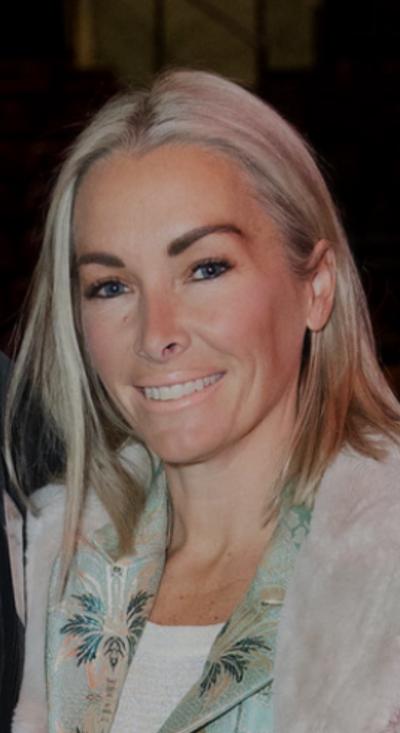
Dr. Abbey Fox (PsyD ’15) began her path into psychology with an early awareness of what was missing in healthcare conversations. As a child spending time in pediatric hospital settings, she noticed that while physical injuries were discussed openly, emotional and psychological experiences often went unspoken. Adults, she observed, were far more comfortable talking about bodies than about fear, grief, or inner pain—an absence that stayed with her and ultimately shaped her professional life.
She carried that curiosity into her undergraduate studies at Princeton University, where her first course in abnormal psychology confirmed her direction. The material didn’t feel like work; she remembers “devouring [the textbook] and staying up late wanting to read more.” That moment marked the beginning of a sense of purpose that has guided her career. “Some people struggle to find that,” she reflected. “I just feel really grateful that I did.”
Before pursuing graduate training, Dr. Fox described herself as a “free spirit,” moving between New York City and Los Angeles while working in the film industry developing stories. After feeling depleted by Hollywood, she co-founded a nonprofit and moved to Ethiopia to work with orphans and street children. The experience proved both humbling and clarifying, revealing the limits of good intentions without formal training and ultimately prompting her return to academia.
A chance trip to Aspen led Dr. Fox to meet her husband, who was based in Vail, and Colorado soon began to feel like home. When she applied to the Graduate School of Professional Psychology (GSPP) at the University of Denver, she was drawn to both the institution’s academic reputation and its values. During her interview, faculty encouraged her to reapply for enrollment in a year to give her time to have her first child and adjust to motherhood—a recommendation that initially disappointed her but ultimately revealed a deep level of care. “These were people who were actually thinking about what was going to be best for me,” she said. Looking back, it represents a guiding principle to Dr. Fox’ work; a goal of humbling revealing blindspots in the best interest of their clients.
When Dr. Fox returned to GSPP the following year as a first-year PsyD student, she did so with her daughter in tow. She credits Dr. Shelly Smith-Acuña as a defining mentor and role model—someone who gave her explicit permission to be both a clinician and a mother, even encouraging her to bring her child to class. “We have to model how this looks for women,” Dr. Smith-Acuña told her.
Graduate school unfolded alongside motherhood, with three children (four total) born during her doctoral training. It took her longer than the traditional timeline to complete her PsyD, but GSPP’s emphasis on supervision, self-awareness, and reflection allowed her to trust her own pace. She recalls a supervisor asking a question that continues to guide her work: “Is the goal to be perfect, or is the goal to be authentic?” For Dr. Fox, the answer was clear—and transformative.
She also speaks with deep appreciation for the breadth of mentorship she received at GSPP. Seminar-style training, group supervision, and ongoing feedback encouraged lifelong self-examination and clinical humility, laying the foundation for her work as a clinician.
Following graduation, Dr. Fox established a private practice in the Vail Valley, where she has spent much of her career serving mountain and rural communities. While often perceived as idyllic, these areas face significant mental health challenges, including high suicide rates, limited access to care, long wait times for providers, and a persistent sense of shame around needing help. “There’s a mentality of ‘what do I have to complain about?’” she explained—one that can prevent people from seeking support.
She also points to deep disparities within these communities, including wealth inequities and the growing vulnerability of Latine and immigrant families. Access to inpatient beds, psychological testing, group therapy, and specialty services remains limited. While recent investments by Vail Health Behavioral Health have improved access, Dr. Fox emphasizes that meaningful progress depends on long-term infrastructure rather than short-term fixes.
These realities led to her involvement with the Vail ROUTES to Wellness Initiative, a collaboration between the University of Denver and Vail Health Behavioral Health focused on building sustainable mental health infrastructure in Eagle and Summit Counties. As a PsyD alumna and member of the GSPP Board of Advisors, Dr. Fox sees Vail ROUTES as a way to address workforce shortages, training gaps, and unmet community needs simultaneously.
Her commitment to the initiative is rooted in both gratitude and responsibility. She speaks openly about her loyalty to GSPP and trust in its leadership, while underscoring that rural mental health cannot improve without intentional investment in training and retention. “If we want better quality of care, we have to provide more robust training opportunities,” she said, pointing to the high turnover and cost-of-living challenges common in mountain communities.
Vail ROUTES to Wellness aims to meet those challenges by establishing rural academic programming, hybrid coursework, immersive field placements, and a sustainable pipeline of bilingual, culturally responsive providers trained specifically for rural settings. Dr. Fox sees enormous potential in aligning a major academic institution with a regional healthcare system. “If we could merge training and supervision with developing clinicians concurrently developing resources for our community,” she said, “it’s such a win-win.”
Dr. Fox credits her experience as captain of the Princeton women’s ice hockey team—and later as a girls’ coach in Vail—with shaping her inclination to think and work from a systems perspective. Through relationships with the Steadman Philippon Research Institute, she has consulted on the behavioral health dimensions of orthopedic rehabilitation and worked with elite athletes. That work has led to an unexpected milestone: an invitation to support the U.S. Olympic effort at the 2026 Winter Games in Cortina, Italy. While not a planned specialty, Dr. Fox sees this work as a natural extension of her holistic clinical lens.
Her clinical focus has evolved over time, with a current emphasis on adolescents, young adults, and families. Dr. Fox finds family systems work particularly meaningful, especially when unresolved pain has persisted across generations. “When I’m uncomfortable in a session, it usually means I’m right where I need to be,” she said. She describes the work as challenging but deeply liberating—creating space for families to address what has long gone unspoken and rebuild connection.
As she looks ahead, Dr. Fox remains deeply invested in the future of GSPP. Serving on the Board of Advisors allows her to collaborate, stay connected to academia, and align her knowledge of rural communities with the school’s evolving vision. Private practice, she notes, can be isolating; board service offers a way to think collectively about long-term impact.
When asked what advice she would offer current GSPP students or early career clinicians interested in rural or community-based work, Dr. Fox speaks about the intimacy of small communities, where change is often visible and deeply personal. She recounts a story of a grandfather tossing stranded starfish back into the sea despite being told he couldn’t save them all—a moment that reframed her understanding of impact: meaningful change may be incremental, but it matters profoundly to those it reaches.
For Dr. Fox, that lesson captures the heart of her work. Sustainable change may take time, but meaningful change happens every day—in families, in communities, and in the relationships built along the way. Whether through clinical practice, systems-building, or shaping the future of GSPP, she remains committed to doing the work that matters, one connection at a time.