Finding Meaning in the Long Haul: Drew Moller’s GSPP Journey
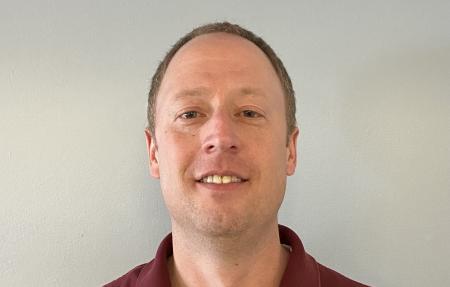
For Drew Moller (MA ’13), who will soon graduate with his doctorate in clinical psychology (PsyD) from the University of Denver’s Graduate School of Professional Psychology, the path to becoming a psychologist began long before he entered the PsyD program. It started with a lifelong curiosity about performance, motivation and human behavior.
Growing up as an athlete and later coaching tennis, Moller was drawn to the mental side of sport. He found himself preoccupied with questions of performance and drive — why athletes do the things they do, and more broadly, “why people kind of act the ways they do.” That curiosity brought him to GSPP the first time, as a student in the Master’s in Sport and Performance Psychology program, which he completed in 2013.
After earning his master’s degree, Moller spent several years working in sport psychology, including performance enhancement and resilience training with military populations. He loved the work, but over time he recognized that he wanted something more expansive.
“I kind of wanted to practice in a more holistic way,” he says. “I wanted to get more experience working with things like trauma… and just have a deeper understanding of things that affect human functioning, like in extreme environments.”
That desire brought him back to GSPP in 2017, this time to pursue doctoral-level clinical training. Returning to the same institution where his graduate journey had begun, he entered a new chapter — one that would broaden his clinical foundation while allowing him to build on his existing interests in performance, military psychology, and trauma.
In the PsyD program, Moller found room to continue along familiar paths while also discovering new ones. Military psychology remained a primary focus — the program’s military track was, he says, “kind of perfect” — and the broader clinical curriculum opened doors to health psychology, integrated behavioral health, and work with a wider range of populations.
“The general coursework, the therapeutic models, being able to put it all together,” he says, gave him the chance to “pursue different avenues” and “broaden the scope a little bit.”
That breadth took shape through his practicum experiences. At the Sturm Center — where he had first encountered military and Veteran work through small-group supervision — Moller later spent several years doing assessments and therapy, deepening those clinical roots. He also trained in integrated behavioral health at a hospital at Fort Carson, completed a practicum at the Salvation Army — where he encountered what he describes as “a lot of really human situations” — and worked at the DU Health and Counseling Center. Each setting brought something different, and so did the supervisors.
Moller’s doctoral journey took longer than he anticipated, spanning years that tested his resolve — and, in his telling, enriched it. He describes the long arc not as time lost but as time accumulated: relationships built, clients served, lessons absorbed across different cohorts and clinical settings.
“I think just overall persevering kind of through all the years… it’s been a long haul,” he says. “I think that’s part of where almost [all] the growth lies, or the learning lies — being able to persevere.”
That perseverance has made reaching the finish line feel like more than a milestone. For much of the program, he notes, there was an inescapable “next thing to the next thing mindset” — a rhythm most graduate students know well. But now, as he completes his internship and prepares to graduate, the full weight of the moment is beginning to settle in.
“Just thinking about finally making it through brings up a lot of different emotions,” he says. “It’s kind of richer in a certain way… in light of the multiple years.”
One of the most significant shifts over those years has been learning to trust himself in the room with clients. Since his first-year seminar, he had heard about the importance of finding a clinical voice — but the concept remained somewhat abstract until experience made it feel real.
“I’m developing my clinical voice,” he says, describing a deepening stability and confidence with clients. “You can see how much it matters to be able to be in the room, not know everything that’s going on, but feel like you’re more stable in that space, you’re more secure in that space of being a clinician.”
Katy Barrs, clinical associate professor and director of the Sturm Center, has seen that growth across multiple stages of Moller’s GSPP experience, serving as his professor, clinical supervisor and doctoral paper chair.
“Over his years at GSPP, I have worked with Drew as his professor, clinical supervisor, and doctoral paper chair,” Barrs says. “I have consistently been impressed by his perseverance, intellectual curiosity, and unwavering commitment to growth. He has developed into a thoughtful, integrative clinician who combines expertise in performance psychology, trauma, and military psychology with genuine humility and compassion for those he serves.”
Moller says the people he has learned from across the years have been central to his development, including Barrs, who has been a consistent presence since his first year, and clinical assistant professor Colby Rogers. He also points to the many supervisors, mentors and classmates whose different styles and perspectives have shaped him. Together, he says, they form “this collage that’s really meaningful” — one that reflects his own integrative approach to clinical work.
“I tend to be pretty integrative,” he says. “It’s fitting that everyone’s been pretty different.”
Currently completing his internship at Marshall University School of Medicine in the Department of Psychiatry and Behavioral Medicine, Moller has found a setting that offers both support and autonomy. He works with clients experiencing trauma as well as health and medical concerns, collaborating closely with psychiatry in an interdisciplinary model of care. After graduation, he will remain at Marshall as a staff psychologist, continuing assessments and trauma work while carrying forward his long-standing interests in military, Veteran, and sport psychology.
For future PsyD students, Moller’s advice is to resist going through the motions.
“It can be easy to fall into a trap of just doing, doing, doing,” he says. Instead, he encourages students to notice “the moments that are meaningful” — with clients, with classmates, even in the work of a single paper or a passing conversation in the hallway. Those moments, he suggests, are what sustain motivation through a demanding program — and what make it worth it.
When asked to define success, Moller doesn’t reach for a title or an endpoint.
“It’s staying committed to a process of growth and a process of learning,” he says, “while also recognizing the things that are good right now.”
What he hopes to carry forward, above all, is the people: the supervisors, mentors, and classmates whose voices he has internalized across years of training. “I’d like to carry that forward and try to embody some of that in my own way,” he says, “because there’s so much value in what the range of people bring.”
For Moller, the longer road was never something merely to endure. It has been the place where meaning accumulated — in classrooms, clinics, supervision rooms, and client sessions spanning nearly a decade. As he reaches the end of one chapter and steps into the next, he carries those experiences forward with the same commitment that has guided him all along: to keep showing up, keep learning, and keep working in service of others.