Preparing for Crisis, Supporting Recovery: Dr. Curt Drennen’s Career in Disaster Behavioral Health
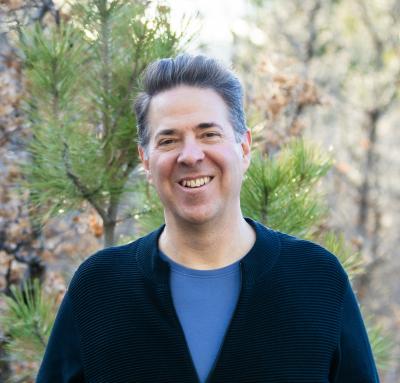
For Curt Drennen (PsyD ’01), a career in psychology has never followed a single, predictable path. Instead, it has unfolded across disciplines, systems, and settings—from nursing and clinical psychology to public health, emergency preparedness, disaster response, and higher education.
Over more than two decades in Colorado state government, Drennen built a career at the intersection of psychology, public health and emergency response. From 2003 to 2010, he worked within the Colorado Department of Human Services’ Division of Mental Health before moving to the Colorado Department of Public Health and Environment in 2010, where he went on to hold a range of programmatic and leadership roles focused on disaster behavioral health, emergency preparedness, healthcare response and community recovery.
That breadth of experience has ultimately become one of Drennen’s greatest professional strengths. A graduate and longtime adjunct faculty member, he has built a career around understanding not only how individuals respond to crisis, but how families, communities and entire systems recover from it.
Drennen’s first degree combined psychology, chemical science, and pre-med studies. After interviewing for medical school, however, he quickly realized medicine was not the right fit. Remembering the advice of a physician mentor, he turned instead to nursing. Psychology remained an interest, but Drennen said he initially lacked a model for how to turn that interest into a career.
Eventually, that changed. Settled in Denver and preparing to start a family, Drennen applied to the University of Denver’s Graduate School of Professional Psychology (GSPP). His first daughter was born just six weeks before he began graduate school.
“I was a new father and a new student,” he recalled.
At GSPP, Drennen developed relationships with numerous faculty mentors and explored interests ranging from family systems and behaviorism to program evaluation and cultural competency. Those experiences would later prove remarkably relevant to a career that required him to work across very different professional cultures.
After graduating, Drennen accepted a postdoctoral fellowship in program evaluation and public psychology under longtime GSPP professor and current Professor Emeritus Thomas Barrett. The fellowship began two weeks after the September 11, 2001, attacks.
The timing proved consequential.
Colorado was also still living in the shadow of the Columbine High School shooting, and devastating wildfires in 2002 would soon create new questions about how communities respond to large-scale loss. Drennen began managing a federally funded crisis counseling and training program following the fires, leading work across five teams, and gaining firsthand experience in disaster mental health.
His involvement deepened as Colorado public health officials began expanding emergency preparedness capabilities. During discussions about whether to implement smallpox vaccinations for first responders and others, Drennen saw an opportunity for psychology to contribute to a difficult public health decision. He and a colleague provided psychoeducation, stress-management support, and structured decision-making assistance.
For Drennen, the experience demonstrated “the value of psychology in this disaster preparedness, disaster response space.” It also helped lead to an interagency agreement to implement a disaster mental health program for Colorado beginning in 2004.
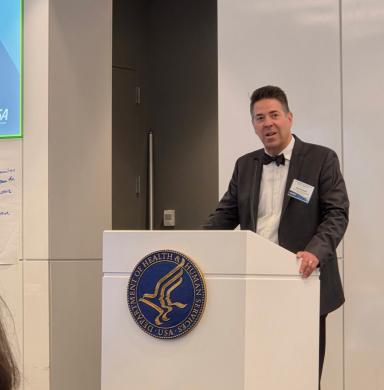
Over the next two decades, Drennen’s responsibilities expanded significantly. His work encompassed disaster behavioral health, mass-fatality planning, hospital preparedness, healthcare coalitions, and public health emergency response. His nursing background allowed him to move comfortably into healthcare preparedness, while his psychological training helped him navigate the human dynamics operating within complex organizations.
“I have often seen working in government and government systems being very similar to family systems,” he said.
Drawing on his GSPP training, Drennen learned to examine how people function within formal and informal roles and how those roles influence the behavior of larger systems. His multidisciplinary background also allowed him to become what he describes as a “boundary spanner” between psychology, public health, medicine, healthcare, and emergency management—fields with distinct professional cultures and ways of approaching problems.
“Coming out of the GSPP with a doctorate, you truly are an expert at how to learn,” Drennen said. “I have used that skill my entire career to keep on looking at what’s next. What do I need to learn next?”
Some of the most difficult experiences of his career have also reshaped his understanding of what it means to help a community after disaster.
Following the Sandy Hook Elementary School shooting, Drennen joined a Colorado delegation that traveled to Connecticut to share lessons from Columbine and other recovery efforts. Despite the group’s considerable experience, he remembers how difficult it was to offer that knowledge in a way that another grieving community could receive.
The experience fundamentally changed his approach.
“I’m much more hesitant to present myself as an expert,” Drennen said. “I have expertise.”
Every disaster, he explained, belongs first to the community experiencing it. Rather than arriving with answers, he has become more intentional about recognizing and elevating “the expertise that the community has around their own experience.”
That distinction is central to what Drennen teaches GSPP students today.
He began working with GSPP’s International Disaster Psychology: Trauma and Global Mental Health program as a field placement supervisor with its first cohort in 2005 before eventually moving into the classroom. Teaching did not come naturally at first. In fact, Drennen remembers being terrified of public speaking as a student and describes an early attempt at teaching a program evaluation course as a challenging experience.
His confidence grew through years of training community mental health centers and other partners across Colorado. Eventually, converting that professional training into an academic course felt like a natural progression.
“I’ve really enjoyed…translating my experience and knowledge in a very niche field into a classroom setting,” he said, “to try and share that knowledge with developing professionals.”
For Drennen, remaining a practitioner is also fundamental to who he is as an educator.
“The practitioner piece has always been so important to me,” he said. “The doing has been very important to me. That’s how I learn—is by doing.”
Central to his teaching is a distinction between trauma psychology and disaster behavioral health. Trauma psychology, as Drennen describes it, often focuses on helping an individual integrate traumatic experiences and move toward healthier functioning. Disaster psychology widens the lens.
“In trauma mental health, trauma psychology, our client is the individual that presents to us seeking services,” Drennen tells his students. “In disaster mental health, our client is the community.”
That means recovery involves more than individual intervention. It requires rebuilding the relationships, institutions, economic connections, and social structures disrupted by catastrophe—“knitting back together the social fabric that has been frayed.”
It is also why Drennen hopes prospective International Disaster Psychology students understand that the program does not prepare them for one narrowly defined occupation.
“There’s not just a job in disaster mental health,” he said. Instead, students develop an understanding of human systems and functioning across cultures while building skills they can apply in many different settings. Success, he believes, requires “an entrepreneurial spirit” and the flexibility to work with individuals, families, communities, and systems at different stages of crisis and recovery.
Now, Drennen is entering another period of professional transition. After his position with the Colorado Department of Public Health and Environment ended in July, he began pursuing new collaborations, including disaster recovery work in Alaska, a professional assignment providing mental health care at McMurdo Station in Antarctica, and plans to expand the private clinical practice he has maintained since 2001.
He is also continuing to think about the future of disaster behavioral health itself—how the field can strengthen its scientific rigor, improve research after major events, and build better connections across academia, government, nonprofit, and private organizations.
For someone whose career has repeatedly crossed professional boundaries, that next chapter seems fitting. Drennen may be moving into unfamiliar territory once again, but he does not minimize what transitions require.
“There’s a loss and grief process that happens with transition,” he said, along with “the fear of trying something new” and “the anxiety of going out into the unknown.”
And yet, throughout his career, moving into that unknown has often been exactly where Drennen has found the next opportunity to learn, contribute, and help build something better.