For Zach Lebovic, Coaching Is a Form of Service
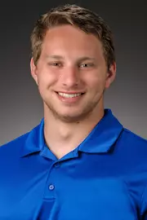
Zach Lebovic was already living the life of a coach when he began the online Master’s in Sport Coaching program at the University of Denver’s Graduate School of Professional Psychology. This June, he will graduate with his master’s after completing the program while working first at UC Santa Barbara and now at Princeton University, where he serves as an assistant coach for the Division I swim team.
For Lebovic, the online format was not just convenient—it made the degree possible. Coaching schedules are often unpredictable, shaped by early mornings, evenings, travel, competitions and recruiting. GSPP’s sport coaching program gave him the flexibility to continue coaching at a high level while pursuing graduate study in a field directly connected to his daily work.
“If [the University of] Denver didn’t offer an online program, I probably wouldn’t have a master’s right now,” Lebovic said.
What drew him to the DU’s sport coaching program was not only the flexibility, but the program’s focus. Lebovic had looked at other graduate options, but GSPP offered something that felt directly aligned with his professional identity: a master’s degree in sport coaching.
“That’s literally what I do,” he said. “I’m a sport coach.”
Lebovic came to the program as both a coach and a former athlete. He swam throughout his life and competed in college, but his interest in coaching began early. After one swim practice as a teenager, he remembers going into the locker room and searching online for swim coach jobs.
“I wanted to be a swim coach since I was 14 years old,” he said. “I only really swam because I wanted to coach.”
That early interest was rooted in more than a love of swimming. For Lebovic, athletics offered a path toward growth, and coaching became a way to help others navigate that process with more support, trust and care than he sometimes felt as a young athlete.
“I really do view swimming, or I guess athletics, as one of the more expedient means to inner development,” he said. “One of my values as a coach is service.”
That value-centered approach was reinforced early in the program. In one of his first applied sport coaching courses, students were asked to identify their coaching values and anchor their work in a larger sense of purpose. For Lebovic, that exercise stood out because it signaled that the program was not simply about tactics, training plans, or technical knowledge.
“The fact that this program is trying to create great coaches in a way that aligns with how I think was something that stood out to me,” he said.
One of the most meaningful courses for Lebovic was Sociology of Sport Coaching with Joesph Mills, international adjunct professor in the sport coaching program. He described it as one of his first introductions to the program’s broader, more human-centered approach. Rather than focusing only on physical preparation, the course asked students to think about why people behave the way they do, what shapes athletes’ experiences and how coaches can better understand the communities they serve.
“That was my favorite course,” Lebovic said. “That course kind of propelled me into doing my [capstone] research project.”
Mills saw that same curiosity and willingness to think critically in Lebovic. “Zach was an excellent student,” Mills said. “He could see firsthand some of the taken-for-granted problems in coaching, and when he picked up our thread of challenging some of sport’s norms to think deeper, broader and coach better, he jumped in with both feet.”
For Mills, Lebovic’s growth in the program strengthened an already promising coaching career. “I’m sure he was already a great coach, but now he is even stronger,” Mills said. “He will fly, as will his athletes, of that there is no doubt.”
Lebovic’s capstone project focuses on perfectionism in elite-level swimming. Through informal conversations with his own swimmers, he has explored where perfectionistic ideals come from, how athletes define perfection and how reframing those ideas might affect both their well-being and performance.
His working theory is that perfectionism is often shaped through language, self-imposed expectations and social constructs. He described perfection as “an invisible moving target that’s impossible to hit,” noting that athletes who spend their time chasing that target are unlikely to feel fulfilled in their sport.
The project connects closely to Lebovic’s own coaching philosophy. He has long believed there is another way to coach—one that is less focused on “brute force and toughness and grit” and more grounded in lightness, trust, relationships and holistic development. The sport coaching program gave him a structure for examining those beliefs more deeply and translating them into research-informed practice.
“This program allows me to do what I do in my daily life,” he said. “It doesn’t make me change anything. It just allows me to expand on it and think a little deeper and a little more critically.”
That integration between coursework and career was one of the defining features of the program for Lebovic. He said that, unlike some graduate programs where classroom learning and professional work may feel separate, the sport coaching curriculum allowed him to apply what he was learning immediately.
“There is no difference between what I do in this program and what I do at work,” he said. “It’s one and the same.”
He saw that connection across the curriculum, from physiology and nutrition to psychology, sociology and strength and conditioning. Even courses that initially felt outside his comfort zone, such as research, data and statistics, became valuable once he understood how they could support his long-term goals.
Lebovic said those research skills may help him contribute to coaching literature in the future. More immediately, they have given him a tangible way to show how a coaching idea can become an intervention, and how that intervention can produce results.
“I didn’t know how to write a research paper backed by science, incorporate theory and then turn that into something I’m using in my daily life,” he said. “But now I have a physical representation that I’ve learned those skills.”
The online format also shaped his experience. While he had taken some online classes during COVID, this was his first sustained online program. It required organization and discipline, he said, but it also fit the realities of coaching. He appreciated the consistent deadlines and the ability to complete coursework while traveling for work.
He also felt connected to faculty, especially through their effort to create community across distance. Lebovic pointed to faculty videos, regular communication and his meetings with Mills, his capstone project research advisor, as examples of how the program created meaningful connection in an online environment.
As he prepares to graduate, Lebovic sees the degree as an important milestone. He said he had never considered himself a traditional student and may not have pursued graduate school if he had not found a program so closely tied to his life and career.
“This program was the perfect fit for what I do,” he said. “It’s actually really special.”
Looking ahead, Lebovic hopes to become a head coach of a college program one day. He believes the degree, the capstone experience and the research-informed perspective he gained through the sport coaching program will continue to support that path.
But perhaps what he will carry most is a deeper conviction that coaching is about education, relationships and the development of the whole person. He sees coaching evolving as younger generations move away from simply repeating what they experienced as athletes and toward more intentional, educated approaches.
“You can’t just live in this echo chamber of what you used to do,” he said. “You have to go out there and treat this like any other profession. You have to go and learn something.”
For Lebovic, the learning affirmed what drew him to coaching in the first place: the opportunity to serve, to build trust and to help athletes grow—not only in the pool, but in themselves.